The Revolutionary Spirit: Why Guru Ravidass Ji was an 'Inquilab' Guru
RavidassGuru
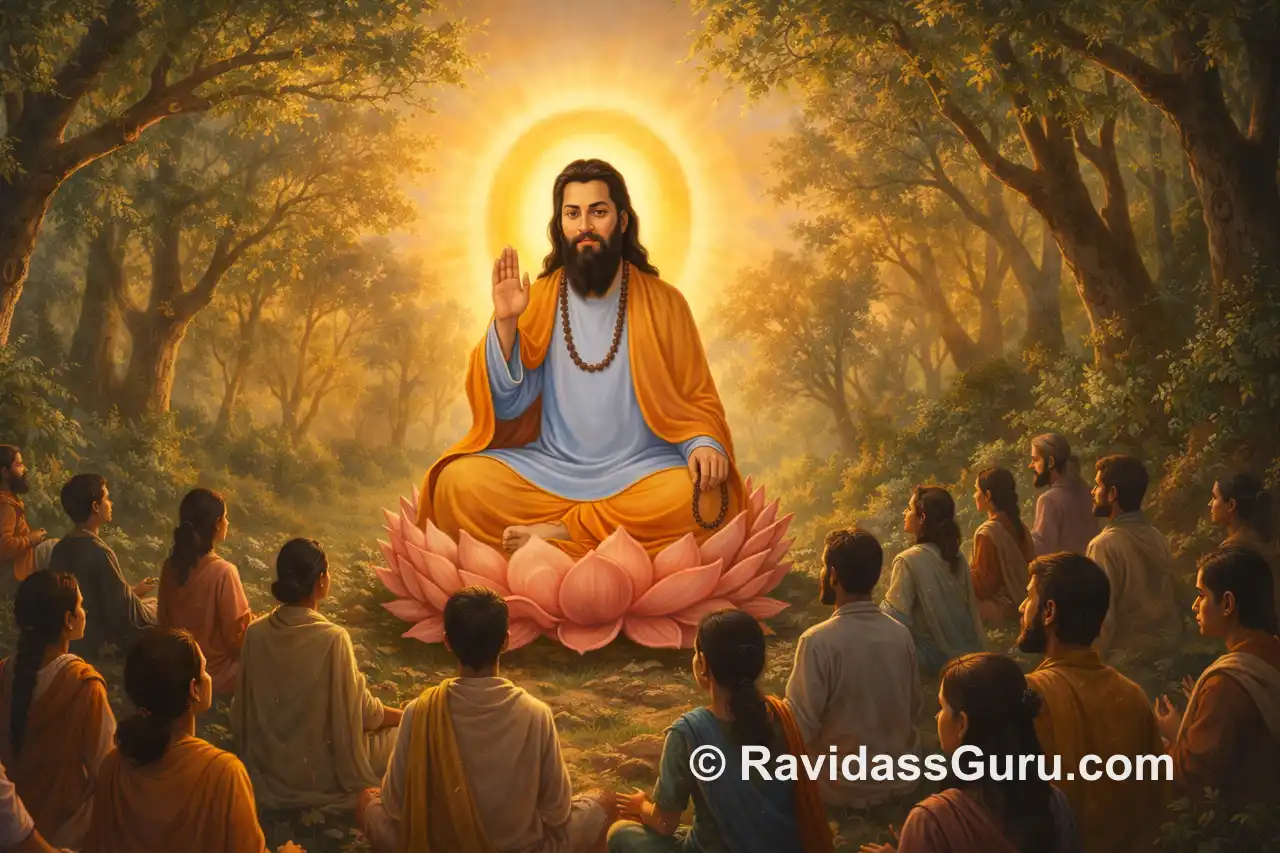
The Revolutionary Spirit of Shri Guru Ravidass Ji
While history often remembers saints for their quiet meditation, Shri Guru Ravidass Ji Maharaj was a different kind of spiritual guide. He was a Krantikari (Revolutionary). In an era where society was fractured by deep-rooted discrimination, Guru Ji didn't just pray—he protested.
"Ravidass madra kya pijeeye jo chadhe chadhe utraye, Naam maharas pijeeye jo chadhe na utraye."
— Why consume an intoxicant that wears off? Drink the nectar of the Divine Name, which brings an eternal bliss that never fades.
1. The 'Inquilab' Against Social Bondage
Guru Ravidass Ji stood up when the marginalized were silenced. At a time when reading, writing, and even bathing in sacred waters were restricted by birth, Guru Ji spoke directly with the rulers and kings of the time.
He proved that spiritual authority comes from character and connection, not from social rank. He was a voice for the voiceless, demanding a seat at the table for everyone.
2. Challenging Ritualism (Karam-kand)
Guru Ji was a vocal critic of empty rituals. He taught that lighting a lamp (Deepak) or burning incense (Dhoop) is meaningless if the heart remains dark.
"True worship is an internal flame. Why seek the light in a temple when the Divine resides within you?"
He redirected the people from expensive, outward ceremonies toward internal meditation and honest living.
3. The Vision of Begampura
Guru Ji’s revolution aimed at a specific goal: Begampura. This was his vision of a "city without sorrow"—a place where:
- There is no taxes or suffering.
- Every citizen is equal.
- No one goes hungry.
He famously said: "Aisa chahu raj mein, jahan mile sabhan ko ann"—expressing his desire for a kingdom where every human being, regardless of caste, is fed and treated with dignity.
4. Compassion and 'Jeeva Hatya'
Guru Ji’s revolution was not just for humans; it was for all living creatures. He stood firmly against animal cruelty (Jeeva Hatya). In his vision of a just society, compassion is the foundation. He taught that if you cannot feel the pain of another living being, you cannot truly understand the Creator.
5. Education: The Tool for Liberation
The audio feedback highlights a powerful connection between knowledge and liberation. Guru Ji believed that Education (Vidya) was the primary tool to escape the "Narak" (hell) of poverty and social bondage. He knew that dignity starts with a full stomach and a trained mind.
Conclusion: Living the Inquilab Today
To follow Guru Ravidass Ji is not just to sing his hymns; it is to live his revolutionary spirit. It means:
- Avoiding Intoxicants: Keeping the mind sober to fight for justice.
- Pursuing Knowledge: Prioritizing education for the next generation.
- Practicing Equality: Treating every human being as a manifestation of the Divine.
As we look at the work of Dera Sachkhand Ballan today—with its hospitals and schools—we see this "Inquilab" continuing. The Guru's 15th-century vision has become a 21st-century mission.
Key Takeaways from the Revolutionary Path
- Inquilab (Revolution): An internal spiritual change that drives a total social revolution.
- Naam-Ras (Divine Nectar): Finding a permanent spiritual "high" to eliminate the need for temporary intoxicants like alcohol.
- Begampura (City without Sorrow): A vision of a just society where everyone lives with dignity and no one goes hungry.
- Vidya (Education): The essential tool to escape the "Narak" (hell) of ignorance and social bondage.